

School-Based Occupational Therapy, Interstate Policy Variability, and the Occupational Therapy Licensure Compact
SATURDAY, OCTOBER 17, 2026
3:30 PM – 4:30 PM
Course Description
Background: Ohio is one of six states that began accepting Occupational Therapy Licensure Compact (OTLC) applications in 2026.(1) 34 additional states have filed or enacted OTLC legislation. The OTLC allows occupational therapy practitioners (OTP) licensed in a Compact state to provide services in other Compact states via a “compact privilege.”(2) While the OTLC expands opportunities for Ohio OTPs to fill service gaps across state lines, differences in state-level interpretation (3,4) of the Individuals with Disabilities Education Act (IDEA)(5) create potential challenges for school-based practitioners.
Purpose: To investigate interstate variability in educational identification policy among OTLC member states and potential impact on school-based occupational therapy services using autism as a model and Ohio’s IDEA interpretation as a reference point.
Methods: We analyzed special education autism definitions, eligibility criteria, assessment requirements, and team member mandates using state education agency and legislative sources for OTLC member states. We also surveyed OTPs regarding knowledge of IDEA and state-level special education policies.
Results: We identified meaningful differences between federal IDEA requirements and state-level policies for autism identification. Ohio aligns verbatim with IDEA, whereas the other five states currently accepting OTLC applications do not. While 25/25 OTPs reported learning foundational IDEA concepts, 0/25 OTPs were aware of differences between IDEA and state policies.
Conclusion: Interstate variability in IDEA interpretation has important implications for school-based OTPs. Limited awareness of state-level differences may increase risk for noncompliant service provision as OTLC participation expands. Targeted efforts are needed to promote policy literacy and support OTP preparedness for compliant cross-state practice.
Speakers
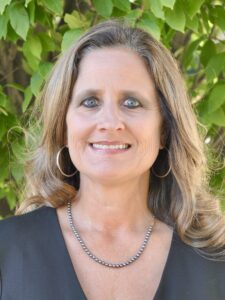


Amy Watson-Grace (AY-mee WOT-sən GRAYS), OTD. OTR/L, BCP is a doctoral candidate in Health and Rehabilitation Sciences at The Ohio State University and a pediatric occupational therapist with over 25 years of clinical experience. She is the owner of Brain Body Connections in Grove City, Ohio, where she collaborates with families and school districts to develop special education plans and provides direct and consultative occupational therapy for children with neurodevelopmental and learning disorders. Her clinical background includes school-based practice, early intervention, NICU care, home health, and skilled nursing, and she holds AOTA Pediatric Board Certification and USC Chan Sensory Integration Certification.
Amy’s research focuses on autism identification policy, sensory processing, pain experiences in autistic adults, and health disparities. She has published extensively in journals including The American Journal of Occupational Therapy, The Journal of Pain, and Autism in Adulthood, and has presented nationally and internationally. She is the recipient of an American Occupational Therapy Foundation Dr. A. Jean Ayres Doctoral Candidate Scholarship and an OSU Presidential Fellowship, and she serves as Government Affairs Committee Chair for the Ohio Occupational Therapy Association. Amy holds a PhD in Health and Rehabilitation Sciences from The Ohio State University, a post-professional OTD and MOT from Chatham University, and a B.A. in Psychology from Capital University.
Jewel Crasta (JOO-əl KRAS-tuh), PhD, OTR/L is an assistant professor in the Occupational Therapy Division in the School of Health and Rehabilitation Sciences at The Ohio State University. Dr. Crasta’s research focuses on examining the relationship between attention and sensory processing in children and young adults on the autism spectrum using neuroimaging tools such as electroencephalography (EEG) and functional magnetic resonance imaging (fMRI) along with performance-based measures. As an occupational therapy (OT) practitioner and neuroscience researcher, Dr. Crasta’s research is aimed at bridging the gap between basic research and observed everyday behavior in individuals with neurodevelopmental conditions to develop evidence-based interventions.
Presentation Slides – click to Access/Download
Content Level
Introductory: This level assumes the audience has little or no information regarding the content area.
Intermediate: This level assumes the audience has general familiarity with the literature and professional practice. The focus of the presentation is on increased understanding and application by the participants.
Advanced: This level focuses on recent advances, future directions and practical application of research.
Practice Areas
Children and Youth; Professional Issues