

Efficient, Adaptable Home Programs for School-Based OT and PT Practice
SATURDAY, OCTOBER 17, 2026
4:30 PM – 5:30 PM
Course Description
School-based Occupational Therapy and Physical Therapy practitioners share a common goal: creating meaningful home programs that support student success. However, time constraints, diverse student needs, and inconsistent family resources or follow-through often make this challenging. These barriers can lead to excessive time spent creating material or avoiding home programs altogether. This session reframes these challenges as opportunities to build stronger, more unified, and efficient approaches to care.
This training introduces a structured, low-prep framework designed to transform common obstacles into practical solutions. Grounded in real-world school-based practice, the model emphasizes three core components: structure, consistency, and flexibility. Participants will engage in a 50-minute instructional session demonstrating how to use pre-designed worksheets and quickly adapt them to meet individual student needs. Activities are intentionally designed to span multiple ability levels while promoting family engagement through video modeling and the use of common household items.
Attendees will receive six customizable home program sheets that can be efficiently implemented across a variety of students. Key concepts include reducing therapist cognitive load, embedding adaptability within each activity, and using predictable formats to support carryover in the home environment. By simplifying the home program process, this unified framework enhances efficiency while maintaining clinical relevance. Participants will leave with ready-to-use tools and a cohesive system they can implement immediately transforming everyday challenges into meaningful opportunities for student success.
Speakers
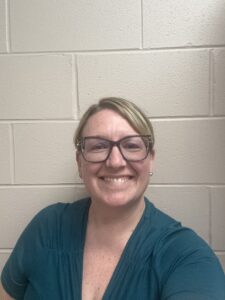

Terri Dinkelaker, BS in PT at St. Louis University in 1993 and received a Doctorate in PT from the University of South Dakota as part of their transitional DPT program in 2018. She has practiced at Good Samaritan Hospital (acute care, rehab, NICU, developmental follow up program, outpatient pediatrics), Kettering Hospital (adult acute care), Nursing home practice, Home care provider, Pediatric inpatient, outpatient, and hippo therapy provider in Indiana for Children’s Specialty Hospital, inpatient and outpatient pediatric provider at CCHMC during her career as a PT. Terri has been practicing as a School-Based PT for the past 17 years and as a PT for the past 33 years. Terri has worked with students ranging from the preschool to high school aged students (aged 3 up to 22 years of age) during her practice as a school-based PT. She has experience working with students with a variety of diagnosis/abilities ranging from Autism, Cerebral Palsy, Developmental Delay, Down Syndrome, Specific Learning Disabilities, and additional complex medical diagnoses. Terri has experience with selecting and implementing appropriate activities and strategies based on a student’s ability level that will help them achieve their greatest potential within limits of their mental and physical capabilities. She also has extensive experience using Adaptive Equipment, Visual Contracts, Visual Countdowns, and Picture Communication Systems with students who have limited verbal abilities and has been named an A-List Therapist by the Montgomery County Educational Service Center (MCESC) Autism and Low-Incidence Coaching Team. Terri has had experience with educating graduate students, involved in research studies, presenting the poster project as part of the research study at the APTA CSM 2025, providing training to staff and students, and working collaboratively with educators and administrators to meet student’s needs and educate students and team members to maximize success. Terri has worked with Denise Campbell, OT in providing building wide sensory motor strategies and gross motor activities. Terri has worked closely with the Kindergarten teachers in her building to develop Tier 1 gross motor videos and Tier 2 level intervention groups that are run by the gym teacher and Kindergarten staff. Terri has presented on a variety of educational topics at the Ohio School Based Practioner’s Summit for the past four years. Terri and Denise have presented with the MCESC Autism and Low-Incidence Coaching Team at Ocalicon.
Denise A. Campbell completed a 5 year Master in OT and received a Master of Science. She has been licensed in Ohio and Registered and practicing in a School-Based practice area for the past 20 years. Denise has worked with students ranging from preschool to high school aged students (aged 3 up to 22 years of age). She has experience working with students with a variety of diagnosis/abilities ranging from Autism, Cerebral Palsy, Developmental Delay, Down Syndrome, Specific Learning Disabilities, and additional complex medical diagnoses. Denise has experience with selecting appropriate activities based on a student’s ability level that will help them achieve their greatest potential within limits of their mental and physical capabilities. She also has extensive experience using Visual Contracts, Visual Countdowns, and Picture Communication Systems with students who have limited verbal abilities and has been named an A-List Therapist by the MCESC Autism and Low-Incidence Coaching Team. Denise has experience supervising both Level I and Level II OT fieldwork students and several Capstone Fieldwork students. She has developed building wide gross motor and sensory strategies in coordination with the PT in her building, Terri Dinkelaker, PT, DPT and the MD teachers in their Building. Denise has also worked closely with the Kindergarten teachers in her building to develop Tier 1 fine motor videos and a Tier 2 intervention group that is run by the building staff with programs developed by previous Capstone students and adapted for additional grade levels at the Elementary School she serves. Denise has presented on a variety of educational topics at the Ohio School Based Practioner’s Summit for the past four years. Terri and Denise have presented with the MCESC Autism and Low-Incidence Coaching Team at Ocalicon.
Presentation Slides Click here to Access/Download
Content Level
Introductory: This level assumes the audience has little or no information regarding the content area.
Intermediate: This level assumes the audience has general familiarity with the literature and professional practice. The focus of the presentation is on increased understanding and application by the participants.
Practice Areas
Children and Youth